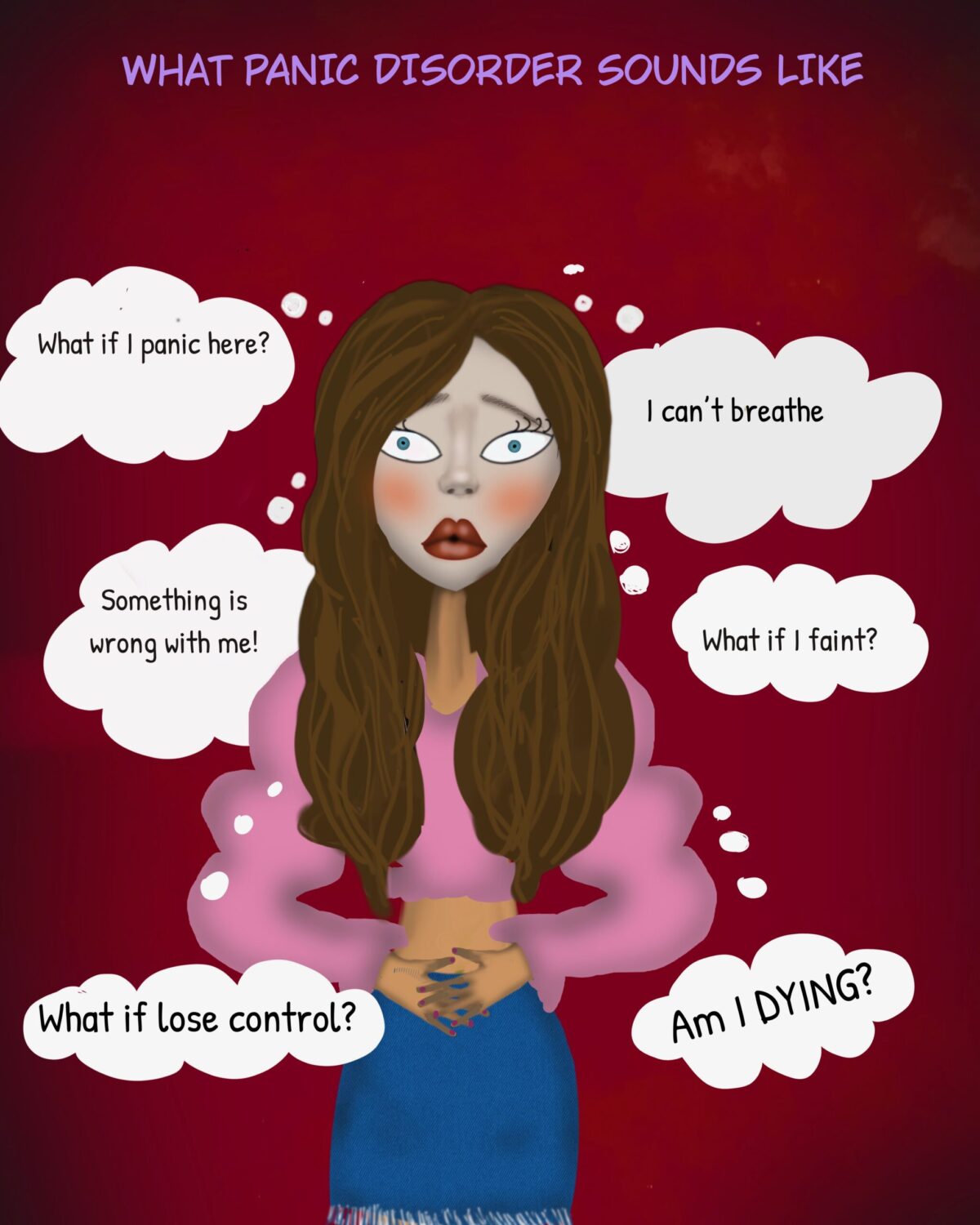
Does Your Life Revolve Around the Fear of Another Panic Attack?
- Do you constantly scan your body for signs that something is “wrong”?
- Have you started avoiding certain places, situations, or activities because you’re afraid you might panic?
- Do crowded stores, driving, travel, restaurants, elevators, or being too far from home suddenly feel overwhelming?
- Have you found yourself wondering, “What if I lose control?” or “What if I can’t escape?”
- Do you feel exhausted from always trying to prevent the next panic attack?
You may avoid highways. Sit near exits. Cancel plans. Stay close to “safe” places. Constantly monitor your heartbeat, breathing, or dizziness. Over time, life can begin to feel smaller and smaller.
Living with panic disorder and agoraphobia can feel incredibly isolating and overwhelming. Many people begin to organize their lives around fear without fully realizing it at first. What may start as a single panic attack can slowly turn into a constant state of anticipation, avoidance, and hypervigilance.
The difficult part is that panic disorder often tricks people into believing they are unsafe when they are not. The body feels convinced there is danger, even when no actual threat is present. Learn why panic attacks keep happening. 👈
The good news is that panic disorder and agoraphobia are highly treatable with evidence-based therapy, including CBT and ERP for panic disorder
What Is Panic Disorder?
Panic disorder involves recurrent panic attacks combined with an ongoing fear of having another one. A panic attack is a sudden surge of intense fear or physical discomfort that can include symptoms such as:
- Racing heart
- Chest tightness
- Dizziness
- Shortness of breath
- Sweating
- Tingling sensations
- Feeling detached or unreal
- Nausea
- Fear of dying
- Fear of losing control
- Fear of “going crazy”
For many people, the first panic attack feels terrifying and confusing. Some end up in the emergency room convinced they are having a heart attack or medical emergency.
Even after medical reassurance, the fear often remains.
What if it happens again?
That question becomes the center of the problem.
Why Panic Attacks Feel So Dangerous
One of the most frustrating parts of panic disorder is that the sensations feel genuinely dangerous. Panic is not “fake.” The symptoms are real physical sensations caused by the body’s fight-or-flight system.
When the brain detects danger, adrenaline increases:
- heart rate
- breathing
- muscle tension
- alertness
This response is designed to protect us during actual danger. However, with panic disorder, the brain begins misinterpreting normal bodily sensations as threatening.
A small shift in heartbeat may suddenly feel catastrophic.
Dizziness becomes:
“What if I faint?”
A rapid heartbeat becomes:
“What if I’m having a heart attack?”
Feeling detached becomes:
“What if I lose my mind?”
The fear of the sensations themselves can then create even more adrenaline, intensifying the panic cycle.
What Is Agoraphobia?
Agoraphobia often develops when people begin fearing situations where escape may feel difficult, embarrassing, or impossible if panic symptoms occur. Many people associate agoraphobia only with being unable to leave home, but the condition is far more complex. Some individuals continue working, traveling, or socializing while silently enduring intense anxiety, while others become increasingly restricted over time.
Common agoraphobia triggers can include:
- driving
- highways
- airplanes
- stores
- crowds
- public transportation
- waiting in lines
- movie theaters
- bridges
- restaurants
- being alone
- being far from home
- Public transportation, such planes, subways and buses
Safety Behaviors That Reinforce Anxiety
Many people with agoraphobia develop “safety behaviors” to reduce distress or prevent panic symptoms. These coping strategies may provide temporary relief, but they often reinforce the belief that situations are dangerous or unsafe.
Common safety behaviors include:
- carrying medication “just in case”
- only going places with a trusted person
- sitting near exits
- constantly checking for escape routes
- avoiding traffic
- monitoring bodily sensations
- leaving situations early
Over time, these patterns can strengthen the cycle of fear and avoidance, making anxiety feel even more convincing and limiting daily life.
How Panic Disorder and Agoraphobia Become Connected
Many people with panic disorder begin avoiding situations where escape feels difficult, eventually developing panic disorder and agoraphobia together. Over time, the fear of panic itself can begin shaping daily decisions, routines, and relationships.
Someone who once drove freely may begin avoiding highways. A person who once loved traveling may start staying closer and closer to home. The fear is not always the place itself. Often, it is the fear of becoming trapped with panic symptoms and feeling unable to escape. Understanding how panic disorder and agoraphobia become connected through fear and avoidance, can help explain why anxiety gradually expands into more areas of your life
Why Avoidance Makes Panic Worse
Avoidance can feel protective in the moment. If you avoid the highway and your anxiety decreases, your brain learns:
“Avoidance kept me safe.”
The problem is that the brain never gets the opportunity to learn:
“I actually could have handled this.”
Over time, avoidance strengthens fear.
This is why panic disorder and agoraphobia can gradually expand into more and more areas of life. Someone may first avoid one bridge, then all highways, then unfamiliar roads, then traveling altogether.
The goal of treatment is not to eliminate all anxiety. The goal is to reduce fear of anxiety itself.
That shift is incredibly important.
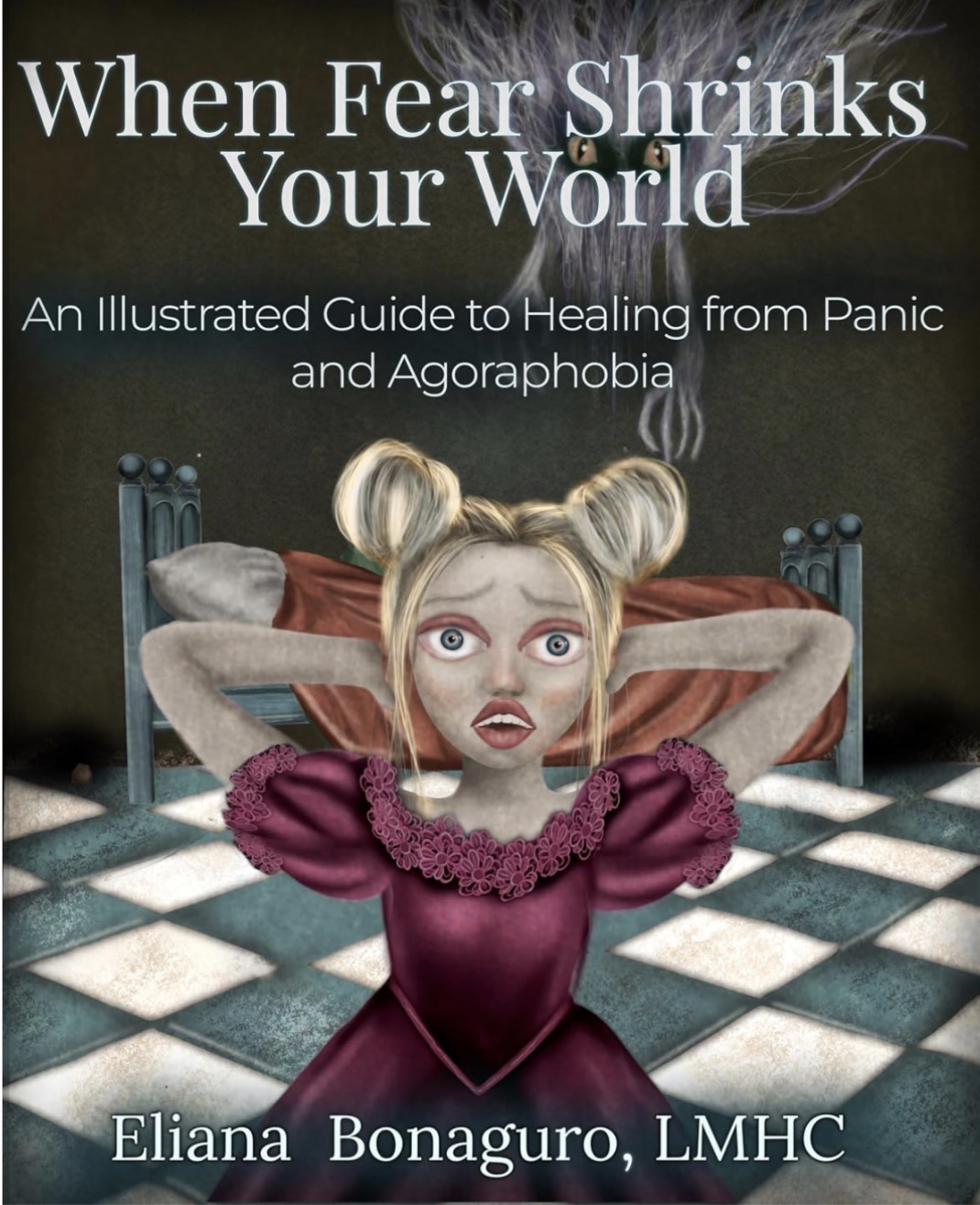
Author of When Fear Shrinks Your : An illustrated Guide to Healing from Panic and Agoraphobia . Find it on Amazon 👈
Frequently Asked Questions About Panic Disorder
Can panic attacks make you pass out?
Although panic attacks can feel overwhelming, most people do not faint during panic attacks. Panic typically increases blood pressure, while fainting is more commonly associated with a drop in blood pressure.
Are Panic Attacks Dangerous?
Panic attacks can feel terrifying, but they are not dangerous.
During a panic attack, your body activates the fight-or-flight response, releasing adrenaline and creating intense physical sensations such as:
- racing heart
- dizziness
- chest tightness
- shaking
- shortness of breath
- nausea
- tingling
- feeling detached or unreal
Because these sensations are so intense, many people fear they are:
- having a heart attack
- losing control
- “going crazy”
- fainting
- dying
In reality, panic attacks are highly uncomfortable, but they are not harmful to the body. The symptoms are caused by the nervous system becoming overstimulated, not by actual danger.
Can panic disorder go away?
Yes. Panic disorder is highly treatable. Many people experience significant improvement through therapy, particularly approaches such as Cognitive Behavioral Therapy (CBT) and Exposure and Response Prevention (ERP).
What is the difference between anxiety and panic attacks?
. Anxiety is generally more gradual and persistent, while panic attacks involve sudden, intense surges of fear and physical symptoms.Many individuals struggling with panic disorder can also expereince chronic worry , hypervigilance and physical anxiety symptoms that can benefit from structured anxiety therapy.
Why do panic attacks happen out of nowhere?
Many panic attacks seem “random,” but often the body has become hyper-alert to internal sensations, stress, or perceived danger signals that may not be consciously recognized.
Can panic disorder cause agoraphobia?
Yes. Many individuals who experience repeated panic attacks begin avoiding situations associated with fear, escape concerns, or embarrassment. Over time, this avoidance can develop into agoraphobia.
Can Panic disorder occur with other conditions?
Can Panic Disorder Occur With Other Conditions?
Yes. Panic disorder often occurs alongside other mental health conditions. Common co-occurring conditions include obsessive-compulsive disorder (OCD), social anxiety disorder, generalized anxiety disorder (GAD), depression, health anxiety, and agoraphobia. In some cases, panic attacks may develop in response to the intense anxiety, uncertainty, or avoidance behaviors associated with these conditions. A thorough assessment can help identify all contributing factors and guide effective treatment. Read this article about how panic disorder, agoraphobia and OCD can occur together
What are common symptoms of agoraphobia?
Common symptoms of agoraphobia include avoiding crowds, highways, public transportation, travel, stores, restaurants, or situations where escape may feel difficult during anxiety or panic symptoms.
Is agoraphobia treatable?
Yes. Agoraphobia often improves through gradual exposure work that helps the brain relearn safety instead of avoidance.
What is therapy for panic disorder like?
Therapy for panic disorder helps people understand why panic attacks happen, why the body reacts so intensely, and how fear of the symptoms can keep the panic cycle going. In therapy for panic disorder, clients learn evidence-based tools to respond differently to anxious thoughts, physical sensations, and avoidance behaviors instead of treating panic like an emergency. Exposure therapy for panic disorder and agoraphobia helps people gradually face feared sensations and situations without avoiding them. Therapy for panic disorder may include cognitive behavioral therapy (CBT), exposure-based strategies, psychoeducation about the nervous system, and gradual exposure to feared sensations so panic becomes less frightening over time.
Can therapy for agoraphobia help me leave the house again?
Yes. Therapy for agoraphobia is designed to help people gradually regain confidence in situations that have become associated with panic, fear, embarrassment, or feeling trapped. Therapy for agoraphobia often includes structured exposure work tailored to the person’s specific fears, whether that involves driving, highways, stores, crowds, restaurants, public transportation, or being far from home. Therapy for agoraphobia focuses on helping people slowly reclaim parts of life that anxiety has taken away rather than waiting to feel “completely calm” before doing things again
Can panic disorder therapy and agoraphobia therapy help me stop fearing panic attacks and avoiding places?
Yes. Panic disorder therapy helps people understand the cycle of panic attacks, anxious thoughts, physical symptoms, and fear that can keep panic going over time. Agoraphobia therapy focuses on gradually reducing avoidance of situations such as driving, stores, crowds, restaurants, highways, or being far from home. Many people benefit from combining panic disorder therapy with agoraphobia therapy because the fear of panic and the avoidance of certain places often become connected. Through panic disorder therapy and agoraphobia therapy, people can learn to respond differently to anxiety, rebuild confidence, and slowly reclaim parts of life that fear may have restricted. Read this article to learn how exposure therapy can help you heal from panic disorder.
Therapy for Panic Disorder and Agoraphobia
Therapy for panic disorder and agoraphobia is not about simply telling someone to “calm down.” Effective treatment helps retrain the fear system.
In therapy, individuals often learn:
- how panic works
- how the anxiety cycle operates
- how catastrophic thoughts fuel fear
- how avoidance reinforces anxiety
- how to gradually face feared sensations and situations
Cognitive Behavioral Therapy (CBT) can help identify and challenge patterns such as catastrophic thinking and fear of uncertainty.
Exposure therapy and interoceptive exposure can also be extremely effective for panic disorder.
Interoceptive exposure involves intentionally practicing harmless physical sensations associated with panic in a controlled way. For example:
- spinning in a chair to create dizziness
- running in place to increase heart rate
- breathing through a straw to mimic breathlessness
This helps retrain the brain to stop interpreting these sensations as dangerous.
For agoraphobia, therapy may involve gradually facing avoided situations step by step while reducing reliance on safety behaviors.
The process is collaborative, structured, and gradual. People are not forced into overwhelming situations without preparation.
Panic Disorder Can Feel Overwhelming, But Recovery Is Possible
When you are living with panic disorder and agoraphobia, it can feel like your world has become organized around fear.. Many people begin doubting themselves, their bodies, and their ability to function normally.Panic attack can indeed slowly begin shrinking a person’s world.
But panic disorder is not a sign of weakness, and you are not “crazy.”
Your nervous system has become stuck in a cycle of fear and protection.
With the right treatment and support, it is possible to reduce avoidance, rebuild confidence, and stop living in constant anticipation of the next panic attack.
Many people who once felt trapped by panic eventually return to driving, traveling, socializing, exercising, and living more freely again.
Recovery does not usually come from eliminating every anxious sensation. It comes from learning that anxiety itself is survivable.
Recovery from panic disorder and agoraphobia is possible with the right support and evidence-based treatment.
If you are struggling with panic attacks, panic disorder, or agoraphobia, therapy can help you better understand the cycle you are stuck in and begin gradually reclaiming the parts of life anxiety has taken away.
I am a therapist licensed in Florida and New York. I have advanced training in Cognitive Behavioral Therapy from the Beck Institute of Cognitive Behavioral Therapy. I offer panic disorder therapy in NYC and panic disorder treatment in Florida. If You are ready to take to take the first step to reclaim your freedom, feel free to schedule a fre 15- minute consultation.
About the Author: Eliana Bonaguro, LMHC, is a licensed therapist in New York and Florida specializing in panic disorder, anxiety, and agoraphobia. She is the author of When Fear Shrinks Your World, an illustrated guide to understanding panic and reclaiming your life.
Pingback: How to Choose a Therapist for Panic Disorder and Agoraphobia