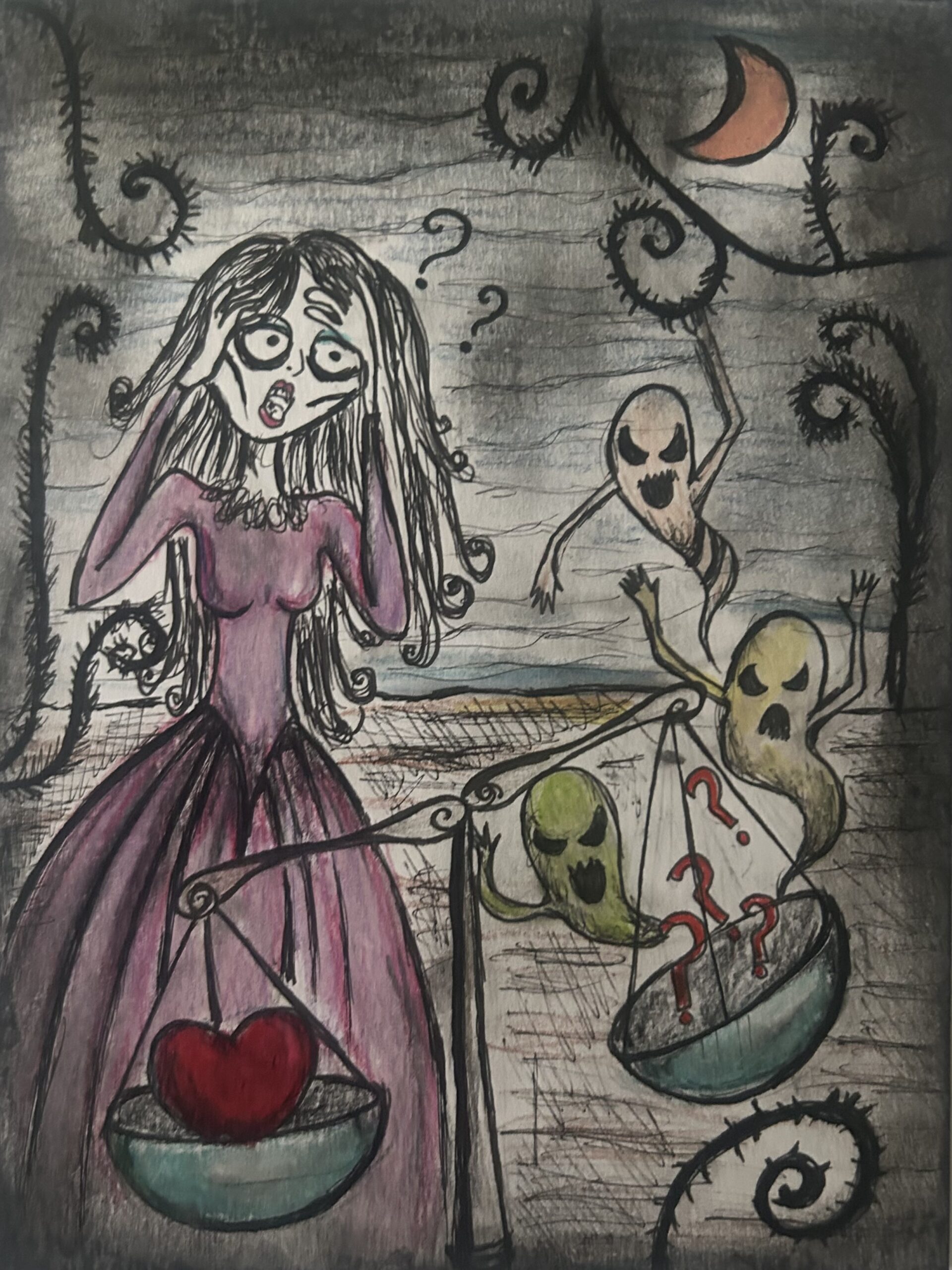
Relationship OCD, often abbreviated as ROCD, is a subtype of obsessive-compulsive disorder that centers on intrusive doubts about one’s relationship or partner. Instead of contamination fears or checking rituals, the obsession attaches to love, compatibility, attraction, or the “rightness” of the relationship.
Everyone experiences doubts in relationships. But relationship OCD feels different. The thoughts are intrusive, repetitive, anxiety-driven, and urgent. They don’t feel like curiosity. They feel like threats.
People with relationship OCD often ask themselves:
“What if I don’t really love them?”
“What if they’re not the one?”
“What if I’m making a huge mistake?”
Sometimes relationship OCD can become focused on your partner’s past. Learn about retroactive jealousy OCD (RJOCD) treatment.
These questions don’t bring clarity. If you wonder whether you may have ROCD, you may want to read this article How do I know If I have relationship OCD?
As an OCD therapist I provide relationship OCD therapy in NYC and across New York and Florida.
What Does Relationship OCD Feel Like?
OCD can show up in many different forms. You can explore other types of OCD here:
👉 Types of OCD
Relationship OCD typically involves many mental compulsions:
Constant mental checking of feelings
Comparing your partner to others
Replaying conversations to look for “proof”
Seeking reassurance from friends or online forums
Googling questions about compatibility
Analyzing physical attraction
Fear that doubt means the relationship is wrong
The person may deeply care about their partner. That’s what makes ROCD especially painful. The anxiety attaches to something meaningful.
Instead of enjoying connection, the mind demands certainty.
And certainty never comes.
Analyzing the partner’s past romantic relationships.
If you’re searching for OCD therapy NYC residents can access online, structured ERP treatment is available
Click here to learn more about OCD mental compulsions.
How Is ROCD Different from Normal Doubt?
Normal doubt is flexible.
It comes and goes.
It doesn’t demand immediate answers.
Relationship OCD doubt is sticky and urgent.
Normal relationship uncertainty might sound like:
“I’m not sure how I feel right now.”
Relationship OCD sounds like:
“If I don’t figure this out immediately, I’m lying to them and ruining both our lives.”
ROCD doubts feel catastrophic. They trigger anxiety, guilt, and compulsive mental review.
The more someone tries to analyze their way to certainty, the worse the anxiety becomes.Normal doubt is flexible.
It comes and goes.
It doesn’t demand immediate answers.
Relationship OCD doubt is sticky and urgent.
Normal relationship uncertainty might sound like:
“I’m not sure how I feel right now.”
Relationship OCD sounds like:
“If I don’t figure this out immediately, I’m lying to them and ruining both our lives.”
ROCD doubts feel catastrophic. They trigger anxiety, guilt, and compulsive mental review.
The more someone tries to analyze their way to certainty, the worse the anxiety becomes.
Relationship OCD doesn’t exist in isolation. For some, these doubts are fueled by a deeper fear of being left, a pattern explored in fear of abandonment OCD. At other times, the distress isn’t about fear, but about the relationship not feeling “right,” which is common in just right OCD. Some individuals also become focused on signs or meaning in their thoughts and feelings, a pattern seen in magical thinking OCD. These questions can even take on a more philosophical tone, overlapping with themes found in existential OCD.
If you’re unsure whether persistent overthinking is anxiety or part of an obsessive-compulsive cycle, learn more about the difference between OCD and anxiety.
What Keeps Relationship OCD Going?
Like all forms of OCD, relationship OCD follows a cycle:
Intrusive doubt (“What if I don’t love them?”)
Anxiety spike
Compulsion (mental review, reassurance, comparison, checking feelings)
Temporary relief
The doubt returns
Compulsions may be invisible. Many are mental.
Trying to “solve” the doubt strengthens the cycle.
Avoiding the doubt also strengthens the cycle.
The mind learns:
“This must be important. Keep checking.”
About My Work With OCD and Relationship OCD
I’m Eliana Bonaguro, LMHC, a licensed therapist specializing in anxiety disorders and OCD. I provide online Relationship OCD therapy for clients in New York City, and New York State and Florida who feel trapped in cycles of intrusive thoughts, doubt, and anxiety.
My clinical training includes specialized education in Cognitive Behavioral Therapy (CBT) and Exposure and Response Prevention (ERP) through the Beck Institute for Cognitive Behavioral Therapy. ERP is considered the most effective evidence-based treatment for OCD and related conditions.
I am also a member of the International OCD Foundation (IOCDF), an organization dedicated to improving treatment and awareness of obsessive-compulsive disorder.
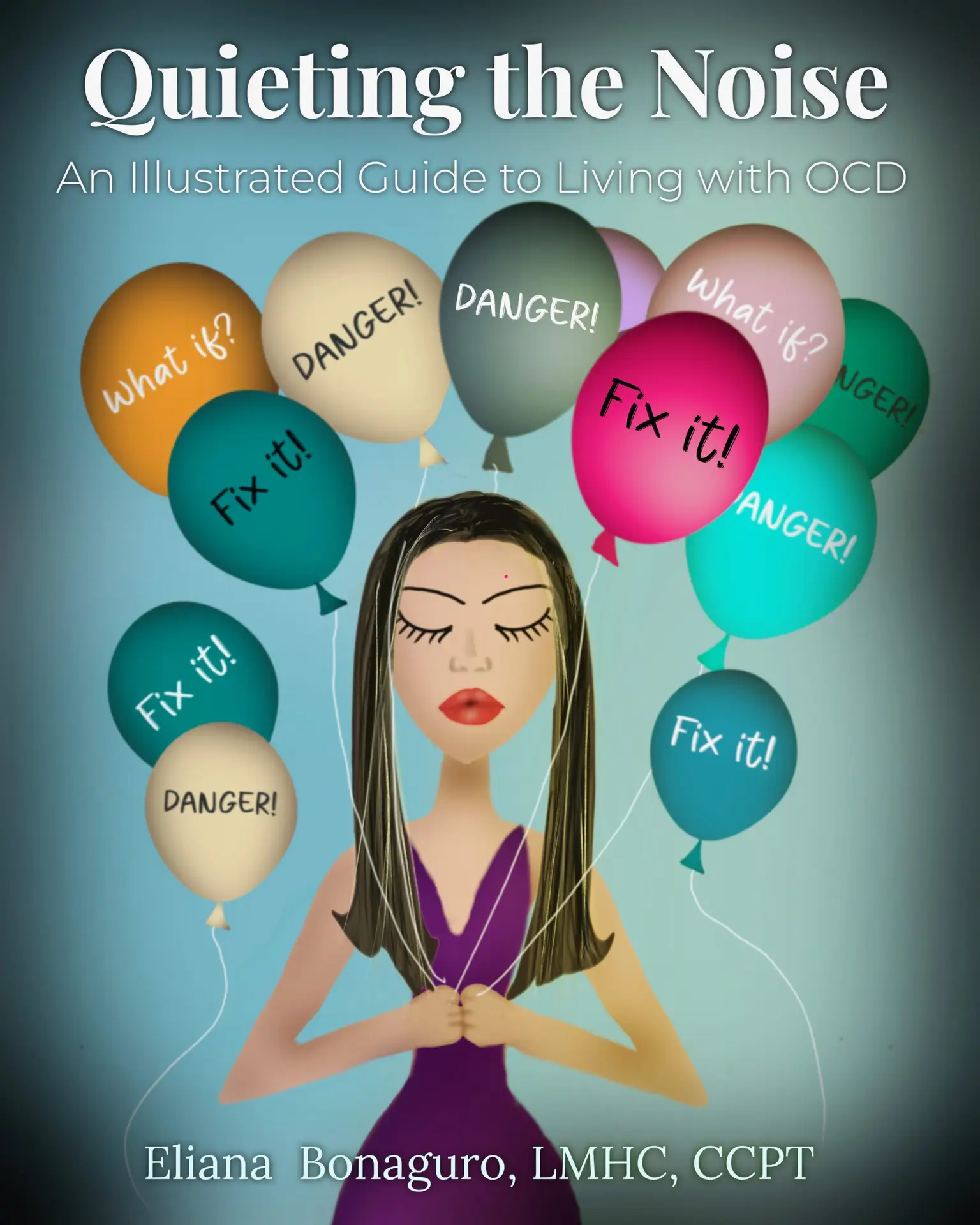
In addition to my clinical work, I am the author of the illustrated OCD guide “Quieting the Noise: A Visual Guide to Living with OCD.” The book was created to help people understand intrusive thoughts and the OCD cycle in a clear, compassionate, and practical way.
My approach to treating relationship OCD focuses on helping clients:
• understand how OCD creates doubt about love and relationships
• stop compulsive reassurance seeking and mental checking
• learn to tolerate uncertainty in relationships
• gradually face feared thoughts using exposure and response prevention (ERP)
Relationship OCD can make people question even the most meaningful relationships. But with the right tools, it is possible to step out of the cycle of doubt and reconnect with what truly matters.
Author of the book Quieting the Noise: An illustrated Guide to Living with OCD. Avaialble on Amazon.
Why Relationship OCD Feels So Convincing
One of the most confusing aspects of relationship OCD is how believable the doubts feel. The thoughts often target the very things people value most: love, commitment, honesty, and responsibility toward a partner. Because the relationship matters, the mind treats every intrusive doubt as a serious problem that must be solved. Someone with relationship OCD may believe that if they don’t analyze their feelings thoroughly, they might stay in the wrong relationship or unintentionally hurt the person they care about. This creates intense pressure to reach certainty about love, attraction, and compatibility. Unfortunately, certainty about relationships is something no one can truly obtain. Love is complex, and feelings naturally fluctuate over time. In healthy relationships, people allow some degree of uncertainty and trust their values rather than demanding perfect emotional clarity. In relationship OCD, however, the mind insists on absolute answers: Do I love them enough? Are they truly the one? What if someone else would make me happier? These questions can spiral into hours of rumination, comparison, and emotional checking. The more someone tries to analyze their way to certainty, the more attention the brain gives to the doubts. Over time, this strengthens the obsessive cycle. What started as a passing thought becomes a constant mental investigation. The goal of therapy is not to prove whether the relationship is perfect or imperfect. Instead, treatment helps individuals step out of the endless search for certainty and learn that intrusive doubts do not require solving. When people stop engaging with the mental checking and reassurance seeking, the thoughts gradually lose their power. Space opens up again for genuine connection, presence, and the ability to make decisions based on values rather than fear.
How Is Relationship OCD Treated?
Yes. Relationship OCD is treatable.
Exposure and Response Prevention (ERP), a form of cognitive behavioral therapy, is considered the gold standard for OCD treatment. In ERP, individuals learn to tolerate uncertainty instead of compulsively trying to eliminate it.
Instead of trying to prove whether the relationship is perfect, therapy focuses on:
Reducing reassurance seeking
Interrupting mental checking
Allowing intrusive thoughts without engaging them
Acting according to values rather than anxiety
Over time, the urgency decreases. The mind becomes quieter. Decisions become less fear-driven.
If You are struggling with ROCD, help is a click away
I provide online OCD therapy throughout New York and Florida for individuals seeking evidence-based treatment.