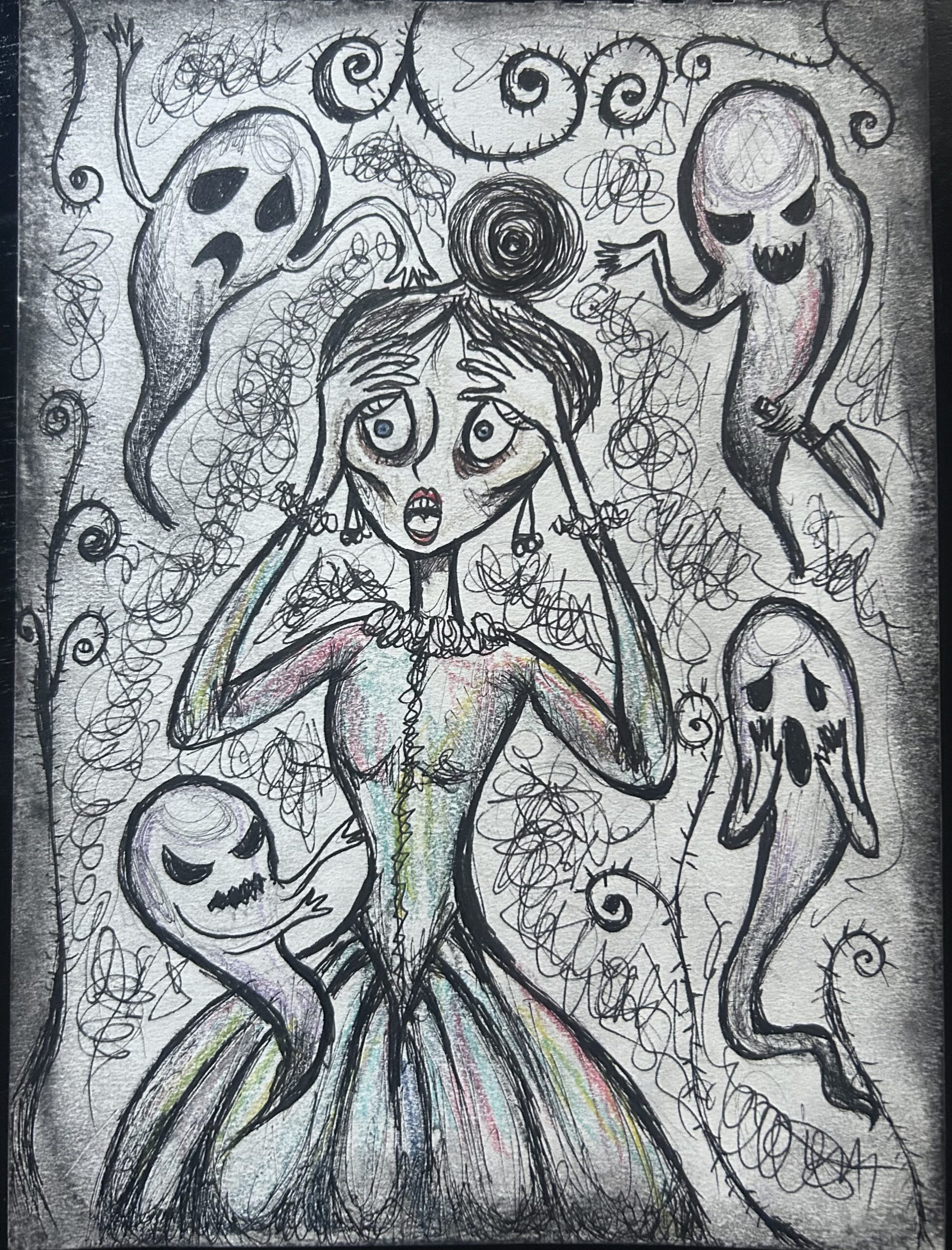
If You are searching harm OCD, chances are you have you ever experienced intrusive thoughts about hurting someone or even yourself, even though you would never want to harm anyone in real life?
Maybe a disturbing thought suddenly appears in your mind.
You imagine hurting someone you love.
You picture losing control or acting violently.
These thoughts can feel terrifying and confusing.
OCD can show up in many different forms. You can explore other types of OCD here:
👉 Types of OCD
Many people who struggle with harm OCD become deeply distressed by these thoughts and start questioning themselves.
- Why would my brain think something like this?
- Does this mean I secretly want to hurt someone?
- What if I lose control and act on the thought?
If this sounds familiar, you are not alone. The presence of violent intrusive thoughts does not mean you are dangerous. In many cases, it is actually a symptom of obsessive-compulsive disorder.
if you are unsure if you could have OCD or anxiety read an article OCD vs Anxiety
You Are Not Alone: Intrusive Thoughts Are More Common Than People Realize
Most people experience unwanted intrusive thoughts at times. Research suggests that up to 90% of people have disturbing or aggressive thoughts occasionally.
For most people, these thoughts pass quickly.
But for someone with harm OCD, the brain reacts differently.
Instead of dismissing the thought, the mind treats it like an emergency. The thought feels extremely important and dangerous, which leads to a cycle of fear and compulsive reassurance.
People with harm OCD often experience:
- intrusive thoughts about hurting loved ones
- fear of losing control
- disturbing mental images of violence
- avoidance of knives or sharp objects
- constant reassurance seeking
- mental reviewing or checking . In fact, These fears often lead to repeated checking behaviors, a pattern commonly seen in checking OCD.
Ironically, the people who experience fear of hurting someone OCD are often extremely compassionate and morally sensitive. The thoughts disturb them precisely because harming others goes against their values.
People with Harm OCD also engage in mental compulsions. Click here to learn more about mental compulsions. 👈
The good news is that harm OCD is highly treatable, especially with evidence-based therapy.
Harm OCD Treatment: How ERP Therapy Helps
One of the most effective treatments for harm OCD treatment is Exposure and Response Prevention (ERP), a specialized form of cognitive behavioral therapy used for obsessive-compulsive disorder.
In therapy, we focus on helping you change your relationship with intrusive thoughts rather than trying to eliminate them.
Understanding the OCD Thought Cycle
Harm OCD often follows a predictable cycle:
intrusive thought → anxiety → compulsions or reassurance → temporary relief → stronger obsession later
The more someone tries to suppress or neutralize the thought, the more powerful it becomes.
Learning how this cycle works is often the first step toward breaking it.
Exposure and Response Prevention (ERP)
ERP therapy gradually helps people face the thoughts they fear without performing compulsions.
Examples of exposures might include:
- writing feared scenarios
- reading triggering phrases
- allowing intrusive thoughts to exist without neutralizing them
Over time, the brain learns that the thought itself is not dangerous.
The fear response decreases, and the intrusive thoughts lose their power.
A Specialized Approach to OCD Treatment
I specialize in the treatment of anxiety disorders and obsessive-compulsive disorder and have received advanced training in cognitive behavioral therapy through the Beckhttps://beckinstitute.org/ Institute for Cognitive Behavior Therapy.
I am also a member of the International OCD Foundation (IOCDF) and work with clients experiencing many different OCD themes, including harm OCD, contamination OCD, relationship OCD, and intrusive thoughts.
In addition to my clinical work, I am the author of the illustrated OCD guide Quieting the Noise, which helps people understand the mechanisms behind intrusive thoughts and learn practical tools for managing them.
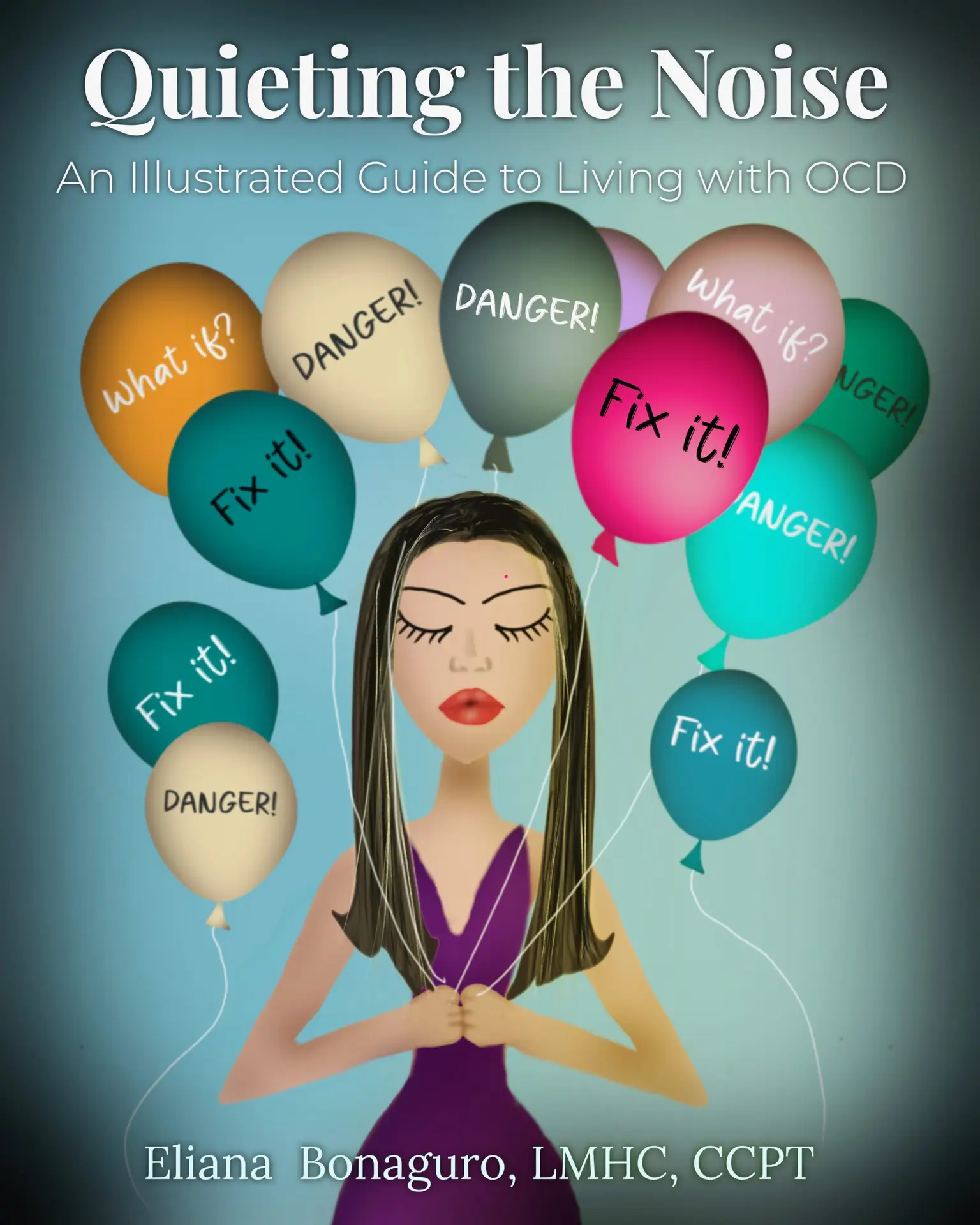
Author of Quieting the Noise: An Illustrated Guide to Living with OCD.
Avaialble on Amazon
Frequently Asked Questions:
Does having violent thoughts mean I want to hurt someone?
No. In harm OCD, the thoughts are unwanted and distressing. People experiencing these thoughts are usually deeply afraid of harming others and actively try to prevent it.
Why do I have intrusive thoughts of harming someone I love?
Intrusive thoughts about hurting others are a common symptom of Harm OCD. These thoughts are not desires or intentions. They are unwanted mental events that occur because the brain is misfiring its threat-detection system.
People with Harm OCD are often highly empathetic and strongly value the safety of others. Because of this, the brain flags certain thoughts as extremely important or dangerous. The mind then becomes hyper-focused on the thought, trying to analyze it, neutralize it, or push it away.
Ironically, the more someone tries to suppress or control the thought, the more persistent it becomes. This creates the cycle that keeps OCD going.
In therapy, the goal is not to eliminate thoughts completely, since everyone has strange or disturbing thoughts at times. Instead, treatment focuses on learning how to respond to them differently so they lose their power.
Exposure and Response Prevention (ERP), the gold-standard treatment for OCD, helps people gradually face these thoughts without engaging in reassurance or avoidance, allowing the brain to relearn that the thoughts themselves are not dangerous.
Why do I keep seeking reassurance about my thoughts?
Reassurance seeking is a common compulsion in OCD. People may ask others if they are a bad person, search the internet, or mentally review their intentions. While reassurance may reduce anxiety briefly, it strengthens OCD over time because the brain learns that the thought is dangerous and must be checked.
What are common compulsions in harm OCD?
Common compulsions may include:
- Avoiding knives or sharp objects
- Avoiding being alone with loved ones
- Repeatedly asking for reassurance
- Mentally reviewing past actions
- Praying or performing mental rituals
- Checking news stories or symptoms for proof they are not dangerous
These behaviors temporarily reduce anxiety but maintain the OCD cycle.
Why do the thoughts feel so real?
OCD attaches intense emotional urgency to intrusive thoughts. When anxiety rises, the brain interprets the thought as a threat, which makes it feel vivid and important. This emotional response can make the thought seem more believable, even though it is simply a mental event.
What if I lose control and act on the thought?
This fear is extremely common in harm OCD. In reality, people with OCD are very unlikely to act on intrusive thoughts, especially when those thoughts cause anxiety and guilt.
Can harm OCD be treated?
Yes. Harm OCD responds very well to ERP therapy, which is considered the gold-standard treatment for OCD.
When should I seek treatment for harm OCD?
If intrusive thoughts about harming others cause significant anxiety, avoidance, or compulsive behaviors, it may be helpful to seek treatment from a therapist trained in OCD and Exposure and Response Prevention (ERP). Effective treatment can help reduce fear and restore a sense of safety and control.
You Don’t Have to Stay Stuck in the Fear
Living with harm OCD can feel isolating and frightening, but effective treatment is available.
With the right support, it is possible to:
- reduce intrusive thoughts
- stop the cycle of fear and reassurance
- regain confidence in your own mind
- live without constantly questioning yourself
If you are struggling with intrusive thoughts about harming someone, therapy can help you learn how to respond to these thoughts in a new way.