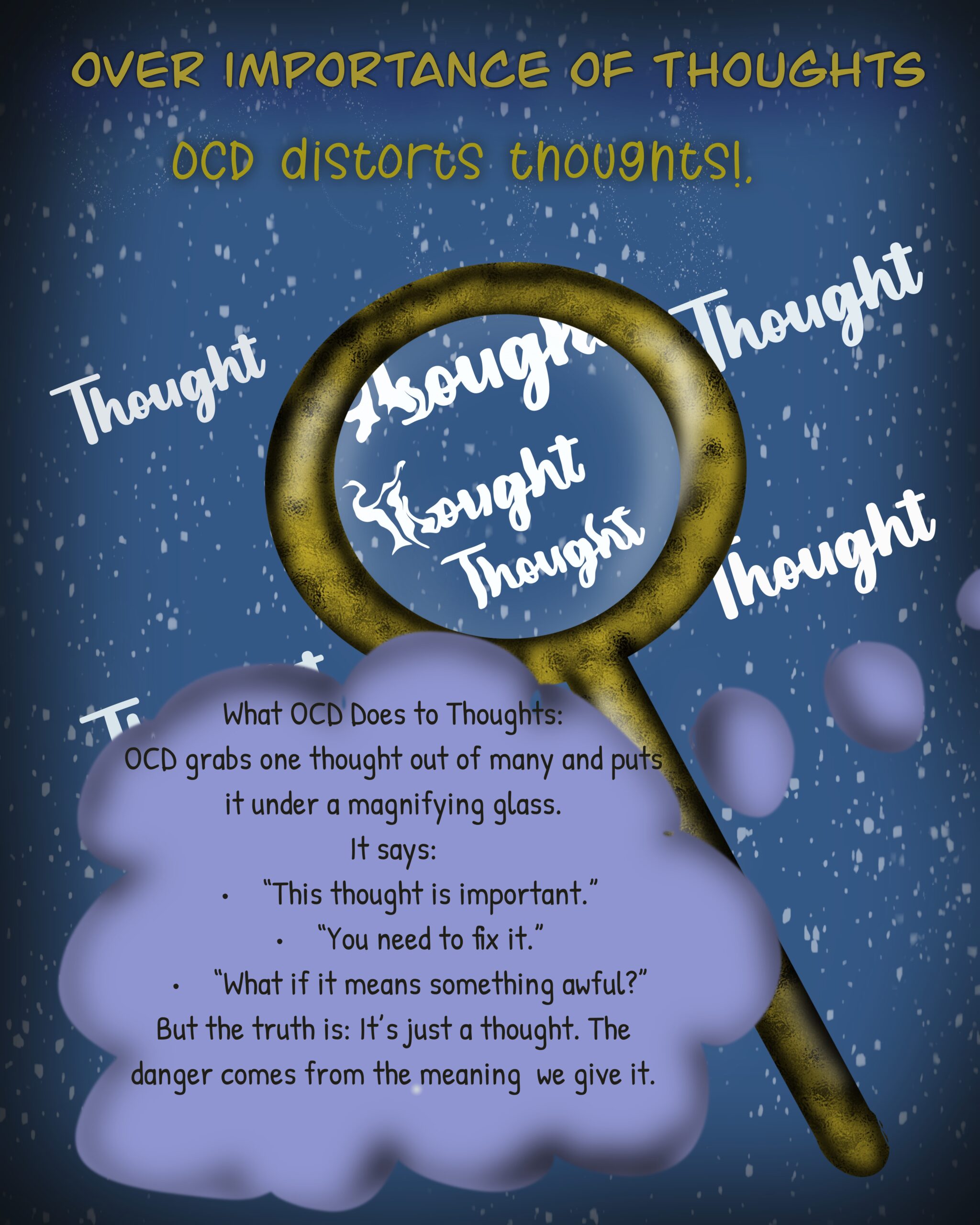
Obsessive Compulsive Disorder: Beyond the Myths
Obsessive-Compulsive Disorder (OCD) is a complex mental health condition that affects millions worldwide. Characterized by persistent unwanted thoughts (obsessions) and repetitive behaviors (compulsions), OCD can significantly disrupt daily life. This article delves into the symptoms, causes, and effective OCD treatment options available for managing OCD, providing insights and support for those affected.
We’ve all heard someone casually say, “I’m so OCD about my kitchen” or “I have OCD when it comes to organizing.” But as a licensed mental health counselor specializing in anxiety and OCD, I can tell you — that’s not what OCD actually is.
Being tidy or particular isn’t a disorder. Obsessive-Compulsive Disorder (OCD) is a serious and often misunderstood mental health condition. It can disrupt someone’s entire life, relationships, and daily functioning — not because they like things “just so,” but because their brain is sending false alarms that feel impossible to ignore.
OCD Presentation:
OCD is defined by:
- Obsessions: unwanted, intrusive thoughts, urges, or images that cause distress
- Compulsions: repetitive behaviors or mental rituals done to relieve that distress
These obsessions are not personality quirks. They are intrusive, distressing, and often go completely against the person’s values. The compulsions feel like the only way to make the anxiety or fear stop — but they only offer temporary relief.
How OCD Works: the OCD Cycle
In my therapy sessions, I often explain OCD using this metaphor:
Imagine there’s a dog under your dinner table, barking for scraps.
The moment you give it food, it quiets down… for a minute.
But over time, the dog learns: barking gets rewarded.
OCD works the same way.
An intrusive thought (the barking) pops up — “What if I contaminated my baby?”
The compulsion (the scrap) might be washing your hands over and over again.
It brings momentary peace, but long-term, it teaches the brain to keep the thoughts coming.
In therapy, we learn to stop feeding the dog — not by ignoring the barking, but by changing how we respond to it.
Perfectionism and OCD: why it’s more than being neat
There’s a big difference between true OCD and the way people casually use the term.
Real OCD might look like:
- A person who mentally replays every moment of the day to ensure they didn’t hurt someone (click here to learn about Harm OCD)
- A mom afraid she’ll snap and harm her child, even though she never has (Click here to learn about Harm OCD)
- A client who checks the stove 15 times before leaving the house, but still fears they missed something (
- Someone who prays a specific way for hours to prevent harm from coming to their family
- Someone who has to complete a certain ritual or bad things will happen (click to read about magical thinking OCD)
- Someone overly concerned about contamination (click here to read about contamination OCD)
- Someone consumed by doubts about their relationship (click here to read about relationship ocd (ROCD)
- Someone overly concerned about order and symmetry , even number, round number etc. and feels like they are going crazy if they don’t fix it ( click here to learn about Just right OCD)
- Someone trapped in endless questions about existence and death (Click here to learn more about existential OCD)
This isn’t about being neat or organized. It’s about a brain that is stuck in fear loops, trying desperately to find certainty.
Effective OCD Therapy : How CBT and ERP for OCD Recovery Work
The gold standard treatment for OCD is Cognitive Behavioral Therapy (CBT), specifically a type called Exposure and Response Prevention (ERP). ERP teaches clients how to face their fears without performing rituals or compulsions.
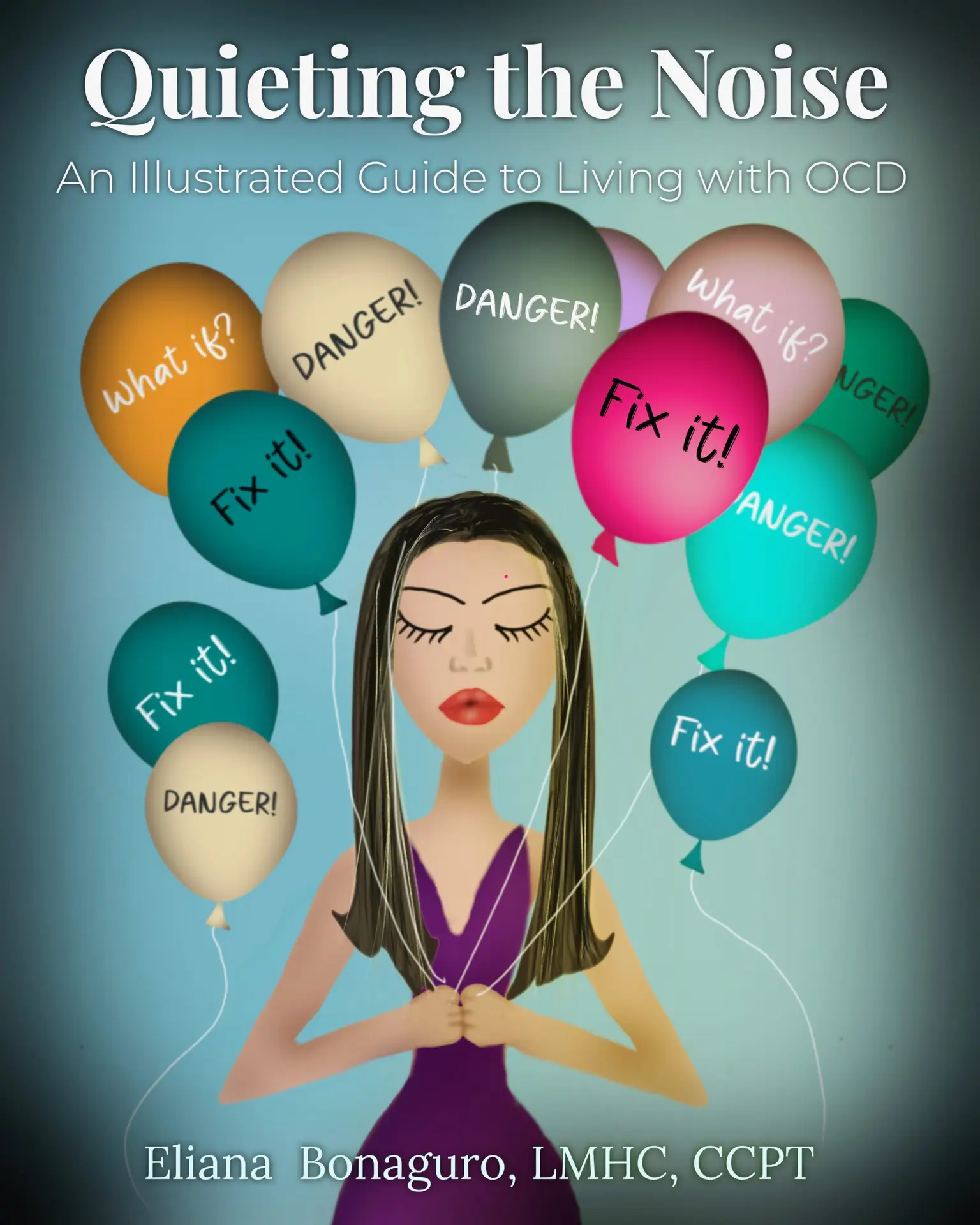
Eliana Bonaguro, LMH, is the author of quieting the noise: an illustrated guide to living with OCD. Avaialable on Amaon .
ERP For OCD
Exposure and Response Prevention (ERP) is the most effective treatment for OCD. It involves gradually facing intrusive thoughts or triggering situations while choosing not to engage in compulsions like checking, reassurance-seeking, or avoidance. Over time, this helps the brain learn that anxiety can rise and fall on its own, reducing the power of OCD.
- Face feared thoughts or situations (Exposure)
- Resist compulsions that temporarily relieve anxiety (Response Prevention)
- Learn that anxiety is survivable — and doesn’t have to control you
We’re not trying to eliminate thoughts. That’s not possible or desirable.
Instead, we’re helping you change your relationship with your thoughts so they no longer run the show
Can you recover from OCD? A Clinical Perspective on OCD Treatment and Healing .
OCD Recovery is totally possible. One of my clients struggled with violent intrusive thoughts. He was terrified he might harm a loved one, even though he had never acted aggressively. Together, we worked on exposure to the thought — writing it down, saying it aloud — and response prevention by resisting the urge to check, analyze, or avoid.
Over time, the fear lost its grip. He realized, “Just because I think something doesn’t mean it’s true — or that I have to do anything about it.
Effective OCD therapy is Available.
the golden standard for OCD treatment and OCD recovery is Exposure and Response Prevention for OCD. If a therapist doesn’t use ERP for OCD , you should find a different provider and traditional talk therapy can make OCD worse.
Key Takeaways on OCD Treatment and Recovery
- CBT for OCD — specifically Exposure and Response Prevention (ERP) — is the most effective treatment
- OCD is not about being neat or quirky — it’s about fear, anxiety, and attempts to gain control
- Therapy helps you build tolerance to uncertainty instead of feeding compulsions
- You are not your thoughts — you can learn to observe them without reacting
About Me
I am a therapist licensed in New York and Florida. I treat Anxiety Disorder, panic disorder, social phobia and every OCD subtype as part of my regular practice. I received advanced CBT training from the Beck Institute of Cognitive Behavioral Therapy and I am a member of the International OCD foundation (IOCDF) . To find out more about treatment with me click here
type of OCD I treat include:
Contamination OCD click here
Harm OCD click there
Pure OCD
Relationship OCD click here
Just Right OCD click here
Magical Thinking OCD click here
Existential OCD click here
Health Anxiety OCD click here
Pure OCD
and more
To find out more , shedule a free consultation at the NYC office, or across Florida and New York . I also offer online session across NYS and Florida, so it doesn’t matter if you are in Miami, Naples, Manhattan , Queens, Brooklyn, Westchester…
If you have any questions about OCD treatment with me click here .