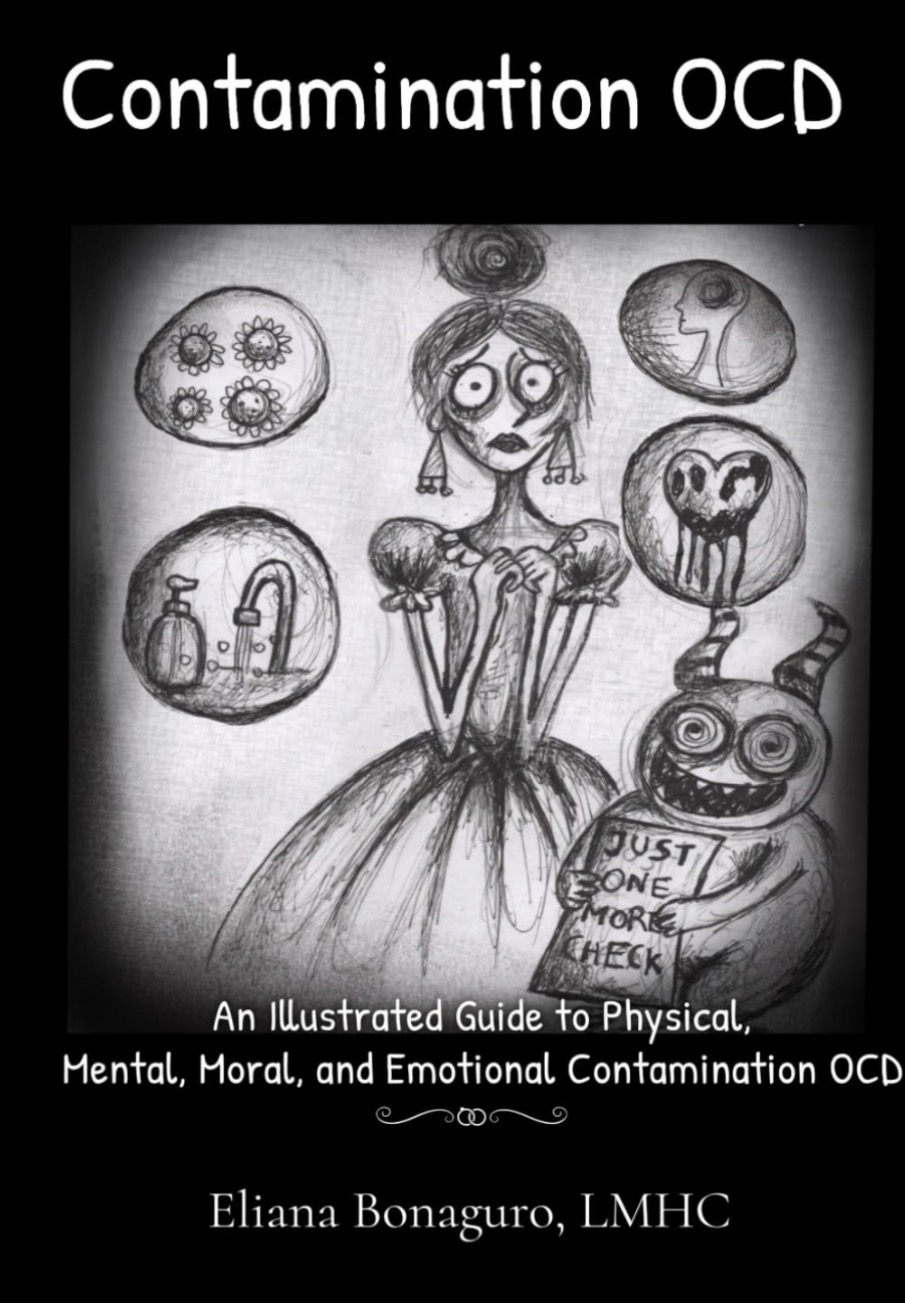
Eliana Bonaguro is the author of Contamination OCD. An Illustrated Guide to Physical, Mental and Moral Contamination OCD. Available on Amazon.
You wash your hands thoroughly. You use soap, rinse carefully, and dry them. But a few moments later, something still feels wrong, and you continue feeling dirty after washing. Your hands feel sticky, unclean, or somehow contaminated. You wonder whether you missed something and feel compelled to wash again.
For people with contamination OCD, contamination anxiety can make feeling dirty after washing an exhausting daily experience. Even when there is no visible dirt or realistic reason to wash again, the sensation of being unclean may persist. Read this article to learn more about contamination OCD.
You might recognize that your hands are clean while simultaneously experiencing a powerful feeling that they are not. Perhaps you examine your fingers, mentally review what you touched, or return to the sink until the sensation disappears.
The problem is not necessarily inadequate hygiene. Obsessive-compulsive disorder can make ordinary sensations, uncertainty, and disgust feel like evidence of contamination.
Understanding why this happens is important because repeated washing often maintains the very discomfort you are trying to eliminate.
Why Do I Still Feel Dirty After Washing?
Feeling dirty after washing can occur when contamination anxiety, obsessive doubt, disgust, or heightened attention to bodily sensations persists after adequate cleaning. In OCD, the feeling of contamination may become disconnected from whether your hands are actually dirty.
Ordinary handwashing has a practical purpose. You wash after using the bathroom, preparing certain foods, or encountering a genuine hygiene concern.
Once you’ve washed adequately, you move on.
But when OCD becomes involved, the standard changes. Instead of asking whether you’ve followed reasonable hygiene practices, you begin asking whether your hands feel completely clean.
This distinction matters because sensations are not reliable measures of cleanliness.
You may wash thoroughly and still experience uncertainty. You may notice an uncomfortable feeling on your skin and interpret it as proof that something remains.
The more you try to eliminate the sensation, the more attention you give it.
Why Your Hands May Feel Sticky or Unclean
Some people with contamination OCD describe their hands as feeling greasy, sticky, coated, or somehow different after touching an object associated with contamination.
These experiences can feel surprisingly physical.
Anxiety and heightened attention can influence how ordinary bodily sensations are perceived which contribute to feeling dirty after washing. When you repeatedly monitor your hands, subtle sensations that would normally go unnoticed may become increasingly prominent.
You might rub your fingers together, inspect your palms, or compare how your skin feels before and after washing.
However, dry skin, irritation, soap residue, and dermatitis can also produce uncomfortable sensations. Persistent physical symptoms deserve appropriate medical evaluation rather than automatically being attributed to OCD.
The important clinical question is whether the sensation triggers repetitive washing, checking, or reassurance seeking beyond reasonable hygiene.
Feeling Dirty Versus Being Contaminated
One of the central difficulties in contamination anxiety is confusing an internal experience with external evidence.
When feeling dirty after washing, the reasoning may sound like this:
“If my hands feel dirty, they must be dirty.”
“If I still feel uncomfortable, I probably didn’t wash properly.”
“If I cannot remember washing perfectly, I should do it again.”
The sensation becomes evidence.
But feeling contaminated does not necessarily mean contamination is present.
This distinction is particularly important when someone intellectually understands that an object is reasonably safe but continues to experience intense discomfort.
How Contamination OCD Causes Compulsive Hand Washing
Compulsive hand washing is maintained partly through negative reinforcement. When washing temporarily reduces anxiety, disgust, or uncertainty, the brain learns to rely on the ritual for relief.
Imagine touching a public doorknob.
An intrusive thought appears: What if someone sick touched this?
You picture germs transferring to your phone, clothing, furniture, and eventually other people.
You wash your hands.
For a moment, you feel relieved.
Then another thought appears: What if I touched the faucet afterward?
You wash again.
Each repetition reinforces the association between obsessional discomfort and the need to perform a cleaning ritual.
The Obsession-Compulsion Cycle
The cycle often follows a predictable sequence:
- You encounter something associated with contamination.
- An intrusive thought, image, or uncomfortable sensation appears.
- Anxiety, disgust, or uncertainty increases.
- You wash, check, avoid, or seek reassurance.
- Your discomfort temporarily decreases.
- Another doubt appears, restarting the cycle.
The problem is not handwashing itself. Appropriate hygiene is necessary and healthy.
The problem is when washing becomes a way to neutralize intrusive thoughts, eliminate uncertainty, or achieve a particular internal sensation.
Over time, compulsive hand washing may become more elaborate, time-consuming, and difficult to interrupt.
Why Washing Until It Feels Right Reinforces OCD
Not everyone washes because they fear illness.
Some people repeat washing because the action does not feel complete.
You may follow a specific sequence, repeat movements involving your fingers and wrists, or start over because something felt wrong.
This experience can overlap with just-right OCD, where a person repeats actions until they achieve a sense of correctness or completion.
Unfortunately, feelings fluctuate.
When the stopping point depends on achieving perfect internal certainty, there may be no reliable endpoint.
Why Contamination Anxiety Persists After Cleaning
One reason contamination anxiety can become so persistent is that OCD continually changes the rules.
Initially, washing once may feel sufficient.
Then you begin wondering whether you washed long enough.
Perhaps you decide to wash twice, just to be safe.
Eventually, you develop a routine involving the soap dispenser, faucet, fingernails, wrists, and towel.
If the sequence is interrupted, you feel compelled to begin again.
The ritual becomes less about removing actual dirt and more about obtaining certainty.
The Role of Disgust in Contamination OCD
For some people, the central experience is disgust rather than fear.
You might recognize that touching a particular object is unlikely to cause illness while still feeling repulsed by it.
Disgust can create a powerful urge to remove, escape, or neutralize the unpleasant sensation.
This is one reason contamination OCD does not always respond to logical reassurance about germs.
Someone may understand that an object is safe and still experience intense discomfort.
Repeated washing can temporarily reduce disgust, but it may also reinforce the belief that the feeling is intolerable and must be eliminated.
Treatment helps people learn that discomfort does not automatically require corrective action.
How Checking and Reassurance Maintain Contamination Fears
Washing is not the only compulsion that can maintain contamination fears. When feeling dirty after washing, you u might examine your hands, smell your skin, mentally reconstruct what you touched, or ask someone whether an object is clean.
You may repeatedly compare how your hands feel now with how they felt immediately after washing.
These behaviors provide temporary reassurance, but they also direct attention back toward the possibility of contamination.
The more you monitor your sensations, the more important they may begin to feel.
When Does Hand Washing Become an OCD Compulsion?
Handwashing may become compulsive when it is repeatedly performed to neutralize intrusive thoughts, reduce obsessional doubt, or achieve a feeling of certainty rather than address a realistic hygiene need.
Common signs include:
- Washing repeatedly because you cannot remember whether you washed correctly.
- Starting a cleaning routine over because it feels incomplete.
- Washing after touching objects that do not ordinarily require cleaning.
- Avoiding everyday objects because you anticipate needing to wash afterward.
- Asking other people whether something is clean enough.
- Mentally reviewing everything you touched to determine whether contamination has spread.
Not every repeated hygiene behavior indicates OCD. Actual exposure risks, medical needs, and the function of the behavior matter.
A clinician experienced in treating OCD can help distinguish reasonable caution from compulsive behavior when dealing with contamination axiety.
How Fear of Germs Leads to Avoidance
For some people, fear of germs OCD gradually expands beyond handwashing.
Your phone may feel contaminated because you touched it before washing. Your bed may seem unsafe because you sat on it wearing outside clothes.
You might avoid public transportation, shared bathrooms, restaurants, visitors, or physical affection.
Some people establish strict boundaries between clean and dirty objects or ask family members to follow elaborate cleaning routines.
What begins as an attempt to feel safe can gradually make everyday life smaller and more restricted.
How to Stop Compulsive Hand Washing Without Ignoring Hygiene
Reducing compulsive hand washing does not mean abandoning normal hygiene.
It means learning to distinguish reasonable cleaning from behaviors intended to eliminate obsessional doubt or achieve a particular internal sensation.
A useful distinction is whether you are washing because of an identifiable hygiene need or because you cannot tolerate the possibility that something might remain contaminated.
The difference can be difficult to recognize when OCD makes uncertainty feel urgent.
Rather than relying on the sensation of being perfectly clean, treatment helps people establish reasonable hygiene standards and practice moving forward without additional rituals.
Exposure and Response Prevention for Contamination OCD
Exposure and response prevention (ERP) is a first-line psychological treatment for OCD and contamination anxiety.
ERP involves gradually encountering situations that trigger intrusive thoughts or uncomfortable sensations while reducing compulsive responses.
For someone who repeatedly washes after touching ordinary household objects, an exposure might involve touching an everyday item and refraining from unnecessary washing afterward.
The goal is not to touch genuinely dangerous substances or disregard appropriate health precautions.
It is to learn that uncertainty, anxiety, and disgust can be tolerated without performing a ritual.
Successful ERP does not require discomfort to disappear during every exercise. Learning that you can continue with meaningful activities without obeying OCD is itself an important part of progress.
How CBT Helps With Obsessional Doubt
Cognitive behavioral therapy (CBT) helps identify interpretations that make intrusive thoughts and sensations feel threatening.
For example:
“If I feel contaminated, I must actually be contaminated.”
“If I don’t wash again, I’m being irresponsible.”
“If there’s any possibility of illness, I have to eliminate it.”
These beliefs may involve overestimating danger, exaggerating responsibility, or treating uncertainty as unacceptable.
CBT helps people examine these assumptions and develop more flexible responses.
The objective is not to prove that contamination is impossible. It is to stop treating every possibility as a reason to perform a compulsion.
How ACT Helps You Respond Differently to OCD
Acceptance and commitment therapy (ACT) can complement ERP by helping people notice intrusive thoughts and sensations without automatically responding to them.
Instead of arguing with the thought “My hands are still dirty,” you can practice recognizing it as an obsessional thought rather than an instruction.
You may still feel uncomfortable.
You may still notice sensations in your hands.
But you can choose to return your attention to an activity that matters to you without waiting for the feeling to disappear.
The goal is not to feel perfectly clean before participating in life. It is to participate in life even when OCD and contamination anxiety tells you that you cannot.
Frequently Asked Questions About Contamination OCD and Hand Washing
Can OCD Make Your Hands Feel Dirty Even When They’re Clean?
Yes. OCD can involve convincing sensations of dirtiness or contamination despite adequate washing. Anxiety, disgust, heightened attention to bodily sensations, and obsessional doubt may contribute to the experience. The sensation alone does not establish that contamination is present.
Why Do I Keep Washing My Hands Even Though I Know They’re Clean?
Repeated washing may be an attempt to eliminate uncertainty or achieve a particular feeling of cleanliness. Even when you recognize that your hands are reasonably clean, the urge to wash can persist because the compulsion temporarily reduces discomfort.
Can You Have Contamination OCD Without Being Afraid of Germs?
Yes. Some people experience contamination-related obsessions driven primarily by disgust, feelings of dirtiness, or a need for things to feel right rather than fear of illness. The specific trigger and function of the compulsion are important considerations in treatment.
Does ERP Mean I Have to Touch Dangerous or Unsanitary Things?
No. ERP is individualized and guided by realistic safety standards. Treatment for contamination OCD and contamination anxiety, including feeling dirty after washing, targets excessive avoidance and compulsive rituals, not ordinary hygiene or medically necessary precautions.
OCD Therapy Can Help You Break the Compulsive Washing Cycle
Living with persistent feelings of contamination can be exhausting. What begins as an attempt to feel safe may gradually consume hours of your day and interfere with relationships, work, and everyday activities.
But your life does not have to revolve around the next opportunity to wash.
I’m Eliana Bonaguro, LMHC, and I provide individualized OCD therapy for adults in New York and Florida. My approach integrates CBT, ACT, and exposure and response prevention, with an emphasis on understanding the cognitive and behavioral patterns maintaining obsessive-compulsive symptoms.
Rather than simply asking clients to confront their fears without preparation, I help them understand the cognitive and behavioral patterns that maintain contamination anxiety and the OCD cycle, while developing practical strategies to respond differently.
If contamination OCD, feeling dirty after washing, repeated cleaning rituals, or obsessional doubt are interfering with your life, learn more about my contamination OCD treatment in NYC or contact me at hello@ellie-counseling.com to discuss working together.
About the Author
Eliana Bonaguro, LMHC, is a licensed psychotherapist in New York and Florida specializing in OCD and anxiety disorders. She has advanced training in cognitive behavioral therapy through the Beck Institute and integrates CBT, ERP, and ACT into her clinical work. A member of the International OCD Foundation (IOCDF) and author of illustrated mental health guides, she provides individualized online OCD therapy for adults throughout New York and Florida.