OCD Therapy New York City
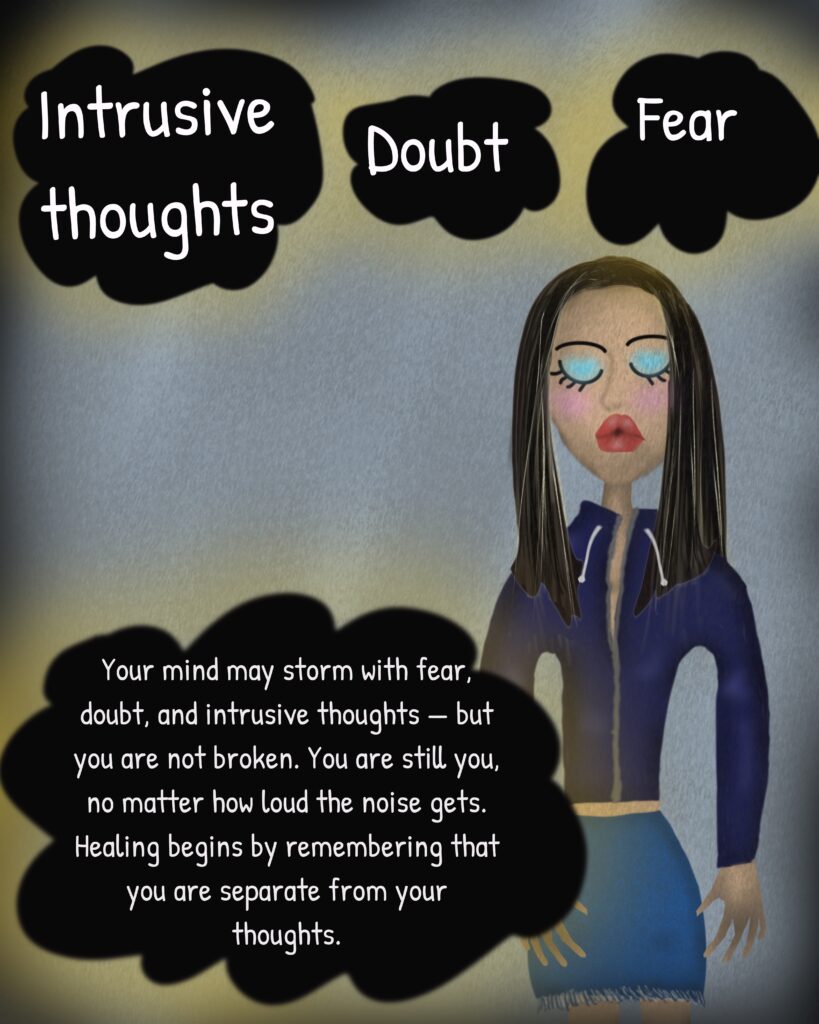
Are Intrusive Thoughts and Compulsions Running Your Life?
If you are searching for OCD therapy NYC or looking for an OCD therapist in New York City, chances are you are tired.
Tired of the mental loops.
Tired of analyzing every thought.
Tired of feeling responsible for things no one else seems to worry about.
• Do intrusive thoughts feel disturbing, violent, or morally upsetting?
• Do you check, confess, Google, pray, count, or mentally review to feel safe?
• Do you replay conversations or scan your feelings to make sure they’re “right”?
• Are you afraid that if you stop the rituals, something terrible will happen?
Obsessive-Compulsive Disorder does not just create anxiety. It creates doubt — persistent, sticky doubt that demands certainty.
You might appear high-functioning. You may have a career, relationships, responsibilities. But internally, it can feel like your brain never shuts off.
What you want is not reassurance. You want freedom from the cycle.
With specialized OCD treatment in New York City, that freedom is possible.
OCD Is a Treatable Anxiety Disorder — But It Requires the Right Approach
OCD affects approximately 2–3% of adults. In a city as large as NYC, that translates to tens of thousands of people quietly managing obsessions and compulsions.
Many individuals delay seeking an OCD therapist in NYC because:
• They think it’s “just anxiety”
• They fear their thoughts say something about their character
• They feel ashamed of the content of their obsessions
• They’ve tried general therapy and didn’t see improvement
Here is what is important to understand:
OCD is maintained by a reinforcement loop. The obsession creates anxiety. The compulsion temporarily reduces anxiety. That relief teaches the brain that the obsession was dangerous.
The cycle strengthens.
Traditional talk therapy can sometimes unintentionally feed the loop by offering reassurance or too much cognitive processing without behavioral intervention.
The good news is that Exposure and Response Prevention (ERP) and CBT for OCD are considered the gold standard treatments worldwide.
When done correctly, they are highly effective.
OCD Therapy NYC Using Exposure and Response Prevention (ERP)
As an OCD specialist in New York City, I provide structured, evidence-based OCD therapy NYC clients can rely on, grounded in Cognitive Behavioral Therapy and Exposure and Response Prevention.
H3: What Is Exposure and Response Prevention (ERP)?
Exposure and Response Prevention (ERP) is a behavioral treatment that helps you gradually face feared thoughts, images, sensations, or situations — without performing compulsions.
Instead of eliminating intrusive thoughts, we teach your brain something more powerful:
You can tolerate uncertainty.
You can experience anxiety without acting on it.
You do not need rituals to be safe.
Over time, your nervous system learns that the feared outcome does not occur — or that you can handle it even if discomfort arises.
The brain recalibrates.
The urgency fades.
The thoughts lose their charge.
How CBT for OCD Works in Session
In OCD therapy in New York City with me, we work systematically.
We begin by mapping your obsession-compulsion cycle in detail:
• What triggers the obsession?
• What meaning does your mind attach to it?
• What mental or physical rituals follow?
• What avoidance patterns maintain the fear?
We then build a customized exposure hierarchy.
Exposures are gradual, collaborative, and intentional. They may include:
• In-session behavioral exercises
• Imaginal exposures
• Reducing reassurance seeking
• Eliminating subtle mental compulsions
• Practicing uncertainty tolerance
• Addressing cognitive distortions such as thought-action fusion, inflated responsibility, or overestimation of threat
This is active therapy. It is not endless discussion about why you have OCD. It is skill-based work that changes how your brain responds to fear.
I received advanced training in Cognitive Behavioral Therapy through the Beck Institute and specialize in anxiety disorders and OCD. I treat contamination OCD, harm OCD, relationship OCD (ROCD), moral scrupulosity, magical thinking, and Pure OCD presentations.
This is not generalized anxiety treatment. This is specialized OCD treatment in New York City.
Intensive OCD Treatment NYC — When Symptoms Feel Urgent
Some clients search for intensive OCD treatment NYC options when symptoms feel severe, time-sensitive, or disruptive to work or relationships.
While I primarily provide weekly outpatient therapy, we can:
• Increase session frequency
• Create structured between-session ERP plans
• Develop daily exposure schedules
• Coordinate care with psychiatrists when medication support is appropriate
Consistency and correct application matter more than speed. OCD responds to precise intervention.
What Makes My OCD Treatment Different
There are many therapists in New York City. Fewer specialize in OCD. I received specialized trainign in Cognitive Behavioral therapy for anxiety disorders from the Beck Institute of Cognitive Behavioral Therapy .
Beyond clinical training, I bring a unique combination of therapist, educator, and author to my work.
I am the author of Quieting the Noise: A Visual Guide to Living with OCD, an illustrated, evidence-based guide designed to make complex OCD concepts accessible and practical.
I also wrote Yesterday It Rained: A Visual Guide to Living with Anxiety, which helps readers understand the emotional and cognitive patterns that sustain anxiety disorders.
Writing these books required translating clinical knowledge into clear, compassionate language. That clarity informs my therapy work. My goal is not only to guide you through ERP — but to help you deeply understand how OCD operates so you can disengage from it long term.
Clients often tell me they appreciate that I can explain the mechanisms of OCD in a way that feels both scientific and human.
You are not just treated. You are educated and empowered.

Author of Quieting the Noise: An Illustrated Guide to Living with OCD
A visual guide that explains intrusive thoughts, the OCD cycle, and evidence-based strategies such as Exposure and Response Prevention. Available on Amazon
Common Questions About OCD Therapy in New York

How do I know if I need an OCD specialist instead of a general therapist?
If your symptoms include intrusive thoughts paired with compulsions, mental rituals, reassurance seeking, avoidance, or constant doubt, working with an OCD specialist is strongly recommended. General therapy can unintentionally reinforce the cycle if ERP is not used.
Does Exposure and Response Prevention really work?
Yes. ERP is considered the most effective psychological treatment for OCD. Research consistently shows significant symptom reduction when ERP is implemented correctly and consistently.
What if I’m afraid to do exposures?
Fear of exposure is completely normal. We move gradually and collaboratively. Exposures are never about overwhelming you. They are about building tolerance and confidence step by step.
Do you provide online OCD therapy in NYC?
Yes. I provide OCD therapy NYC residents can access online from the comfort of their own home. I work with individuals in Brooklyn, Manhattan, Queens, Long Island, Westchester, and throughout New York State using secure telehealth sessions.
How long does OCD treatment take?
The timeline varies depending on severity, subtype, and engagement with between-session practice. Many clients begin noticing improvement within weeks when actively participating in ERP.
What types of OCD do you treat?
Obsessive-Compulsive Disorder can look very different from person to person. Many people are surprised to learn that OCD is not just about cleaning or checking.
As an OCD specialist in New York City, I treat a wide range of OCD subtypes, including:
• Contamination OCD (fear of germs, illness, bodily fluids, toxins)
• Harm OCD (fear of harming others or yourself)
• Relationship OCD (ROCD) (doubts about your partner or your feelings)
• Moral or Scrupulosity OCD (fear of being immoral, sinful, or “bad”)
• Magical Thinking OCD (belief that thoughts or rituals prevent catastrophe)
• Checking OCD (repeated checking for safety, mistakes, or harm)
• Pure OCD (Pure O) — primarily mental compulsions such as rumination, analyzing, or seeking internal certainty
• Health-related OCD (distinct from general health anxiety when compulsions are present)
• Sexual orientation or identity OCD
• Existential OCD (distressing doubts about reality, meaning, or consciousness)
While the themes may differ, the underlying mechanism is the same: intrusive doubt followed by compulsive attempts to neutralize it.
In OCD therapy in NYC, we focus less on the theme of the obsession and more on breaking the cycle that keeps it alive for lasting change.
OCD Specialist NYC — A Structured Path Toward Freedom
OCD convinces you that certainty equals safety.
ERP teaches you that flexibility equals freedom.
In therapy, you will learn to:
• Stop negotiating with intrusive thoughts
• Reduce compulsions without replacing them with new ones
• Accept uncertainty without spiraling
• Break the reassurance cycle
• Build confidence in your ability to tolerate discomfort
Over time, the volume of OCD decreases.
Not because the thoughts disappear entirely — but because they lose authority.
That shift changes everything.
Take the First Step Toward Relief

If you are looking for compassionate, structured, evidence-based OCD therapy in New York City, I invite you to schedule a free 15-minute consultation.
We can discuss your symptoms, answer your questions, and determine whether Exposure and Response Prevention feels like the right approach for you.
You do not have to keep battling intrusive thoughts alone.
Relief is possible. Not by controlling every thought — but by changing your response to them.