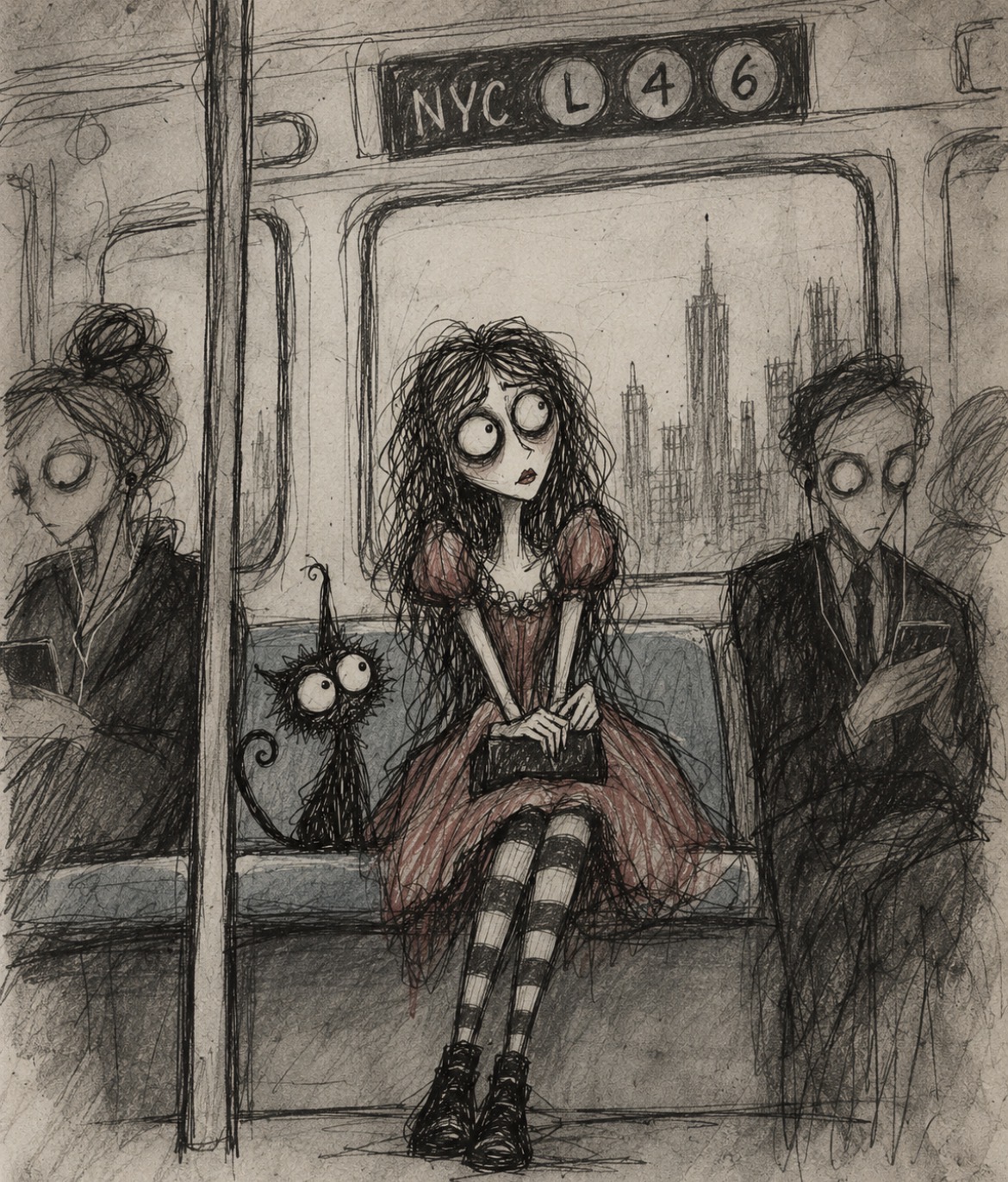
Panic attacks on the subway can turn an ordinary NYC commute into something you dread. You get on the train, the doors close, and suddenly you notice your heart beating faster. Maybe you feel hot, dizzy, nauseated, lightheaded, or short of breath. Then the thoughts start: What if I panic? What if I need to get off? What if I faint? What if I throw up? What if the train gets stuck and I can’t escape?
For someone experiencing subway anxiety, a routine train ride can start to feel like something that needs to be survived.
And in New York City, where the subway is often how you get to work, see friends, go to appointments, date, or simply move through the city, avoiding it can have a much bigger impact than you might expect.
At first, you may make small adjustments. You take an Uber instead. You avoid express trains. You travel outside rush hour. You stand near the doors or choose the least crowded car.
But gradually, those adjustments can become rules.
And without realizing it, your world can start getting smaller.
Why Do Panic Attacks Happen on the NYC Subway?
The subway combines several things that can be especially difficult when you have panic disorder or agoraphobia: crowds, heat, noise, physical sensations, limited exits, and periods when you cannot immediately leave. Learn how panic disorder and agoraphobia become interconnected through fear and avoidance.
But often, the subway itself isn’t really what you’re afraid of.
You’re afraid of what might happen if you panic while you’re on it.
You may fear fainting, vomiting, losing control, embarrassing yourself, becoming overwhelmed by physical sensations, or simply feeling trapped with no way to escape.
After experiencing panic attacks on the NYC subway, your brain can begin treating the train—and sometimes even the station—as a threat.
Soon, the anxiety starts before you get on.
You might notice your heart beating faster as you walk toward the station. You scan the platform to see how crowded it is. You calculate how many stops you have to travel or how long you’ll be underground. Maybe you let a crowded train pass and wait for the next one.
By the time you actually step onto the train, your nervous system is already on alert and we start experiencing fear of another panic attack every time we take the subway.
The Fear of Another Panic Attack Can Become the Bigger Problem
Panic attacks can produce intense physical sensations: a racing heart, sweating, dizziness, nausea, trembling, chest tightness, shortness of breath, feeling unreal or disconnected, or feeling unsteady.
Once you’ve become afraid of those sensations, even ordinary changes in your body can start to feel threatening. Learn more on what causes panic attacks here👈
You notice your heart beating.
Why is it doing that?
You feel slightly warm.
Is this starting again?
You feel a little lightheaded.
What if I pass out?
Now you’re monitoring your body even more closely.
The more dangerous those sensations seem, the more anxious you become. And anxiety itself creates additional physical sensations.
This can create a powerful cycle in which you aren’t only afraid of the subway anymore.
You become afraid of experiencing anxiety on the subway.
And sometimes the fear of having another panic attack becomes more limiting than the original panic attack itself.
How Panic Attacks on the Subway Can Lead to Agoraphobia
Agoraphobia is often misunderstood as simply being afraid to leave the house.
It doesn’t necessarily look like that.
Someone with agoraphobia may go to work, meet friends, shop, exercise, and appear to have a fairly active life. Underneath that life, however, may be an increasingly complicated system designed around avoiding situations where escape could feel difficult or help might not be readily available.
In NYC, those boundaries can become extremely specific.
Maybe you can ride three stops but not twelve.
Local trains feel manageable, but express trains don’t.
You can take the subway with your partner but not alone.
You can ride at 11 a.m., but rush hour feels impossible.
You can go somewhere as long as you know exactly how you’ll get home.
You might even have certain subway lines or stations that feel “safe” and others you avoid completely.
Each individual decision can seem reasonable.
The problem is when anxiety begins making more and more of those decisions for you.
Safety Behaviors Can Quietly Keep Subway Anxiety Going
Avoidance isn’t always as obvious as refusing to take the subway.
You may still ride the subway every day while doing a tremendous amount to prevent yourself from panicking.
Maybe you always stand beside the doors. You constantly check how many stops are left. You distract yourself with your phone. You carry water, medication, mints, or other “just in case” items. You monitor your breathing or heart rate. You avoid crowded cars. You only ride with another person. You take local trains because you know you can get off sooner.
Or perhaps the moment your anxiety becomes intense, you get off the train.
These behaviors make sense when you’re frightened. And they often work—in the short term.
You feel safer.
But there’s a catch.
Your brain may conclude that you got through the subway ride because you stood near the door, distracted yourself, carried your emergency items, or escaped before your anxiety became worse.
You don’t get the opportunity to learn something different:
Maybe I could have handled the anxiety even without doing all of that.
This is one of the ways safety behaviors can unintentionally keep panic disorder and agoraphobiagoing.
When Agoraphobia Starts Making NYC Feel Smaller
This is one of the hardest parts of agoraphobia.
New York is enormous. Yet anxiety can gradually reduce it to a handful of places that feel safe.
Maybe you stop going to Brooklyn because the subway ride feels too long.
You turn down a restaurant because it’s too far from home.
You skip a concert because you’re worried about getting trapped in the crowd—or about the subway ride afterward.
You don’t apply for a job because the commute involves an express train.
You avoid seeing a friend because getting there requires changing subway lines.
You start choosing doctors, restaurants, stores, dates, jobs, and social plans partly according to how easily you can get there and how quickly you could get home.
At some point, subway anxiety isn’t really about the subway anymore.
It’s affecting how much of your life feels available to you.
The city hasn’t gotten smaller.
But your life inside it has.
Avoiding Panic Can Make the Fear Stronger
Avoidance is incredibly reinforcing because it works immediately.
Imagine that you’re waiting for the train and your anxiety suddenly shoots up. You leave the station.
Within a few minutes, you feel better.
Your brain learns something from that experience: Leaving made me safe.
The next time you enter the station, the urge to leave may be even stronger.
The same thing can happen when you avoid a particular subway line, take an Uber instead of the train, travel only with another person, or cancel plans because you’re worried about having a panic attack.
Every individual decision may seem small.
But when avoiding panic becomes the organizing principle behind your choices, the range of situations that feel safe can become narrower and narrower.
This is why panic attacks on the subway can sometimes develop into a much broader pattern of agoraphobic avoidance.
How CBT and Exposure Therapy Can Help With Subway Anxiety
Treatment for panic disorder and agoraphobia doesn’t mean throwing yourself onto a packed train during rush hour and forcing yourself to endure it.
Good exposure therapy is much more intentional than that.
In CBT for panic disorder, we first look at the cycle maintaining the fear.
What physical sensations frighten you?
What do you believe might happen if those sensations become stronger?
Which situations have you started avoiding?
What do you do to make yourself feel safer when you can’t avoid them?
Once we understand your particular panic cycle, treatment can include different forms of exposure.
Interoceptive Exposure for Panic Attacks
Interoceptive exposure involves intentionally bringing on some of the physical sensations you fear.
Depending on the person and appropriate medical considerations, exercises can be designed to produce sensations such as a faster heartbeat, breathlessness, dizziness, or feeling warm.
That can sound strange at first.
Why would you deliberately create the sensations you’re trying so hard to prevent?
Because repeatedly experiencing a feared sensation without responding to it as an emergency can help you learn something new about it.
Instead of automatically interpreting a racing heart as something is wrong or I’m about to panic, you can begin learning that the sensation itself is something you can experience and tolerate.
Situational Exposure for Subway Anxiety and Agoraphobia
Treatment can also involve gradually approaching the situations you’ve been avoiding.
There isn’t one standard subway exposure hierarchy that everyone needs to follow. It should reflect your particular fears and avoidance patterns.
For one person, an early exposure might involve entering a subway station and staying there without immediately escaping.
For another, it could mean riding one stop.
Later exposures might include taking a longer trip, riding alone, taking an express train, using an unfamiliar route, or riding when the train is more crowded.
We may also work on gradually reducing the safety behaviors you’ve come to depend on.
The goal isn’t to make sure you never experience anxiety.
It’s to learn that you can experience anxiety without immediately escaping from it or organizing your life around preventing it.
“What If I Actually Have a Panic Attack on the Subway?”
This is often the question underneath everything else.
And therapy isn’t about promising that you’ll never have another panic attack.
If your freedom depends on knowing with certainty that you won’t panic, panic remains in charge.
Instead, treatment helps you change your relationship with the possibility of panic.
You learn what’s happening when your body’s alarm system activates. You begin responding differently to frightening physical sensations and catastrophic thoughts. You practice allowing anxiety to rise and fall without immediately escaping or trying desperately to make it disappear.
Over time, the question can begin to shift from:
What if I panic and can’t get out?
to:
What if I feel anxious and I can handle it?
That’s a very different way of getting onto a train.
And it’s a very different way of moving through New York City.
How Avoidance Can Gradually Increase With Agoraphobia
Agoraphobia often develops gradually.
You may not wake up one morning unable to take the subway. Instead, there may be months or years of small accommodations, avoided situations, shortened trips, changed routes, canceled plans, and increasingly complicated rules about where you can go and under what conditions.
That’s why it’s worth paying attention when panic attacks on the subway begin changing your behavior.
You don’t have to wait until you can no longer ride the train at all.
The goal of treatment isn’t simply to get you back onto the subway.
It’s bigger than that.
It’s helping you regain the ability to choose where you go based on where you want your life to take you—not where anxiety allows you to go.
Panic Disorder and Agoraphobia Treatment in NYC
I provide panic disorder and agoraphobia treatment in NYC for adults struggling with panic attacks, fear of physical sensations, subway anxiety, avoidance, and the growing fear of being somewhere they can’t easily escape.
My approach incorporates CBT and exposure-based strategies tailored to the specific fears, physical sensations, avoidance patterns, and safety behaviors that are keeping your panic cycle going.
Treatment isn’t about forcing you into frightening situations or telling you to simply “push through” your anxiety. We work systematically toward helping you understand panic, change your response to feared sensations, reduce avoidance, and gradually reclaim situations that anxiety has taken away from you.
If panic attacks on the subway are beginning to determine where you go, how you travel, or how much of New York feels accessible to you, you may also find my guide on how to choose a panic disorder and agoraphobia therapist helpful. If you’re ready to discuss treatment, you can contact me to schedule a consultation and see whether therapy may be a good fit.
About the Author
Eliana Bonaguro, LMHC, is a licensed mental health counselor in New York and Florida specializing in anxiety disorders, including panic disorder, agoraphobia, and OCD. She has advanced training in Cognitive Behavioral Therapy through the Beck Institute of Cognitive Behavioral Therapy and uses CBT and exposure-based approaches in her work. She is also the author of anxiety mental health guides including When Fear Shrinks Your World: an Illustrated Guide to Treating Panic Disorder and Agoraphobia
Pingback: How to Choose a Therapist for Panic Disorder and Agoraphobia